How to Choose Safe, Low-Tox Brands for Children (The KIDDYKIND Method)
- At KIDDYKIND we vet every brand against four criteria: Materials, Build, Design Philosophy and Trust Signal.
- We're parent-founded. We hold every brand to the standard we'd want for our own families.
- We turn down more brands than we stock.
- This page is the standard, every brand we stock has cleared all four steps.
- If a brand changes its materials, suppliers or standards, we re-vet.
The short answer: At KIDDYKIND we use a four-step vetting method to decide whether a brand makes it onto the site. We assess materials (what is this actually made of), build (will it last), design philosophy (was this made by people who understand children) and trust signal (would we put this in our own home). A brand has to clear all four. Most don't.
Here's the long version, in case you want to know exactly what we look for and why.
The moment this method exists for
You're standing in a shop or on a website, with a product in your hand. The marketing says "natural." Or "organic." Or "made with love." Or "non-toxic." And what you actually want to know is, is this safe? Is it well-made? Will it last?
The honest answer is that those words don't mean what most parents assume they mean. There's no shared, regulated definition of "non-toxic" in most categories. "Natural" can include things you don't want near your child. And "made with love" is not a material specification.
We built KIDDYKIND because we got tired of doing the research alone, every time, for every brand. So we built a system. This is it.
Why brand vetting matters more than ever
Greenwashing in the consumer market is significant. A 2021 international sweep led by the UK's Competition and Markets Authority (CMA) found that around 40% of environmental claims on consumer websites could be misleading. In children's products specifically, the gap between marketing language and material reality is often wide.
At the same time, what goes into children's products genuinely matters. Their bodies are smaller, their skin is more permeable, their developmental windows are shorter and they spend more hours-per-day in contact with the materials around them than adults do. A toxin that's "low concern" in an adult-sized dose may behave very differently in a 12kg toddler.
This is the problem brand vetting is built to solve. Not paranoia, just informed choice.

The KIDDYKIND 4-step vetting method
Every brand we stock has cleared all four of these steps. Here's exactly what we look at.
Step 1, Materials
This is the hard line. What is the product actually made of?
For each product, we look at:
- The primary material (wood, cotton, plastic, metal) and where it's sourced
- Treatments, finishes, dyes, coatings, glues and binding agents
- Whether the brand uses or avoids common-problem materials: BPA, phthalates, PFAS, formaldehyde-based glues, synthetic fragrances, flame retardants and certain plasticisers
- Independent certification: GOTS for organic textiles, OEKO-TEX for chemical safety in fabric, EN 71 for European toy safety, FSC for wood sourcing
If a brand can't tell us what's in their products, that's not a brand we stock. Transparency is the floor, not the ceiling.
Step 2, Build
Will it survive a real child?
Children's products get used. Hard. The question we ask is whether a piece is designed for one season or for siblings. For Build we look at:
- Construction quality (joinery, stitching, fixings, finishes)
- Reparability, can broken parts be replaced or fixed
- Warranty length and the brand's repair/replacement record
- Independent reviews and longevity reports from parents we trust
- Our own use, where possible we put pieces through real-home conditions before we stock them
A beautifully marketed product that breaks in three months is not low-tox. It's landfill with good photography.
Step 3, Design Philosophy
Was this made by people who understand children, or by marketers who don't?
This step is the most subjective and we hold it the most strictly. We look at:
- Who founded the brand and what their background is
- Whether children's developmental needs are visibly considered in the design (open-ended play, movement, age-appropriate scale, sensory considerations)
- Whether the brand listens to its customers and iterates, or pushes the same product regardless
- The brand's stance on sustainability, on production conditions and on whose work made the product
Good design philosophy shows. So does its absence.
Step 4, Trust Signal
Would we put this in our own home?
This is the simplest step and also the deciding one. After all the research, after every certification check and material breakdown, we ask: would we genuinely choose this for our own children?
If the answer is no, the brand doesn't make the site. We're parent-founded. We hold every brand to the standard we'd want for our own families.
What we won't stock (the red lines)
A few things are automatic disqualifiers:
- Products containing phthalates, BPA or known endocrine disruptors in the primary materials
- PFAS-treated textiles ("forever chemicals")
- Synthetic fragrances in baby and toddler products
- Brands that can't or won't share material specifications
- Brands with documented exploitative production conditions
- Products that fail real-world durability beyond what the marketing claims
These aren't preferences. They're non-negotiable.
How we actually research a new brand
For every brand request or new range, we follow a consistent process:
- Brand discovery. We dig into materials, sourcing, certifications, manufacturing locations and testing standards. Sometimes that's through a questionnaire, more often through direct conversation with the founder or team. If a brand can't or won't tell us what's in their products, we don't progress.
- Independent verification. We cross-check certifications directly with the certifying bodies. Not all logos are legitimate.
- Sample testing. Where possible we order samples, use them in our own homes, share them with friends-of-KIDDYKIND families and gather real feedback.
- Reference checks. We talk to other retailers, parent communities and reviewers who've worked with the brand.
- Internal vote. Every brand decision is made together. One "no" can hold up a brand we love.
It's slow. It's the point.

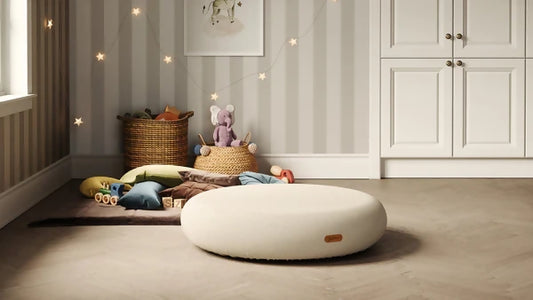
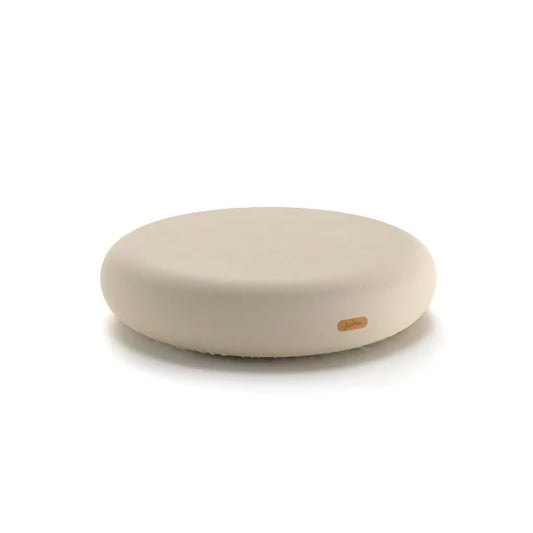
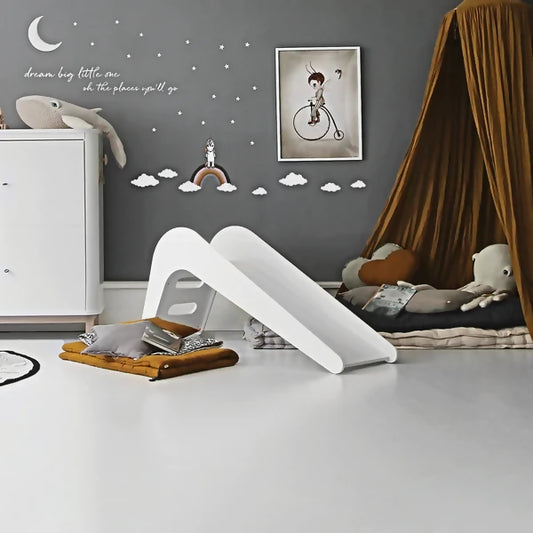
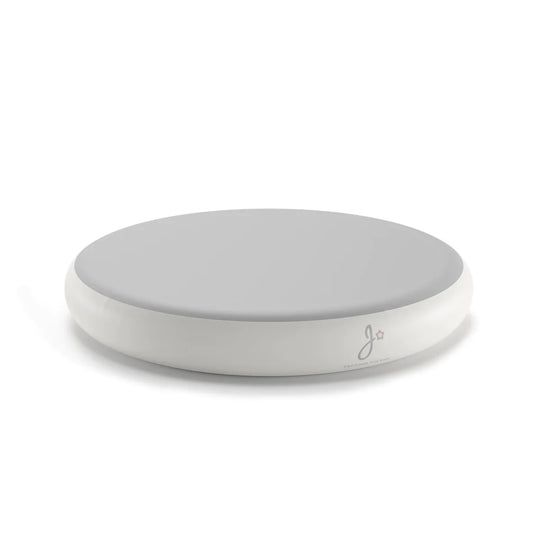
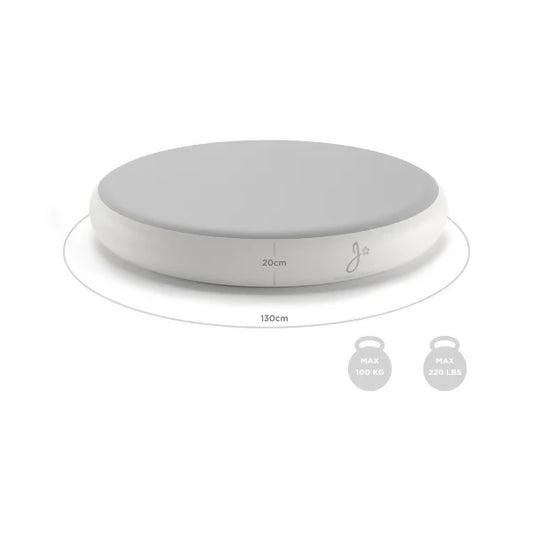
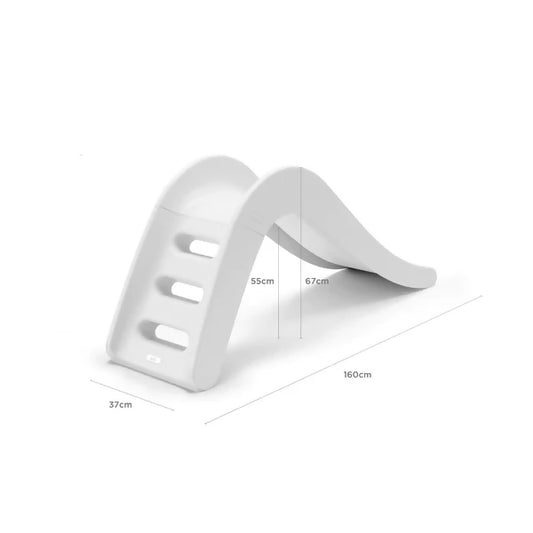
What this looks like in practice: Jupiduu
To make this concrete, here's how it played out for one of our most-loved brands.
Materials, Jupiduu uses solid sustainably-sourced wood, with non-toxic finishes that meet EN 71 European safety standards. Cleared.
Build, Jupiduu pieces are designed to last 5+ years of real use, with construction that supports growing-into not growing-out-of. Cleared.
Design Philosophy, Jupiduu was founded by people who understood that children's movement equipment usually fits one of two categories: institutional or flimsy. Their pieces are neither. They're designed for real family homes around the way children actually want to move. Cleared.
Trust Signal, yes. Several of us at KIDDYKIND have Jupiduu pieces in our own homes.
→ Read the full Jupiduu deep-dive
The same process applies to every brand we stock. Every one of them.
FAQs
What does "low-tox" mean at KIDDYKIND? "Low-tox" at KIDDYKIND means the product avoids known harmful substances (phthalates, BPA, PFAS, formaldehyde-based glues, synthetic fragrances in baby and toddler products, certain plasticisers and flame retardants) and uses materials we're confident are safe for long-term contact with a child.
Do you only stock brands with full certifications? Most of the brands we stock carry at least one major certification (GOTS, OEKO-TEX, EN 71, FSC), but a certification on its own isn't enough. A brand has to clear all four of our vetting steps regardless of how many logos appear on its packaging.
What about smaller makers without big certifications? We stock smaller makers, but they have to be radically transparent about materials and processes. We'd rather stock a one-person studio that can show us every material in the chain than a big brand that can't.
Do you re-vet brands once you've stocked them? Yes. If a brand changes its materials, suppliers or production conditions, we re-vet. Once-vetted isn't always-vetted.
Can I suggest a brand for you to consider? Please do. Email us with the brand and a line about why you love it. Every brand on the site started with someone telling us about it.
What this means for you
If a brand is on KIDDYKIND, you can trust that we have looked at it the way we wish someone had looked at things for us when we were new parents.
You don't have to do the research from scratch every time. You don't have to translate "non-toxic" or guess what's behind the marketing. We've done the work, and we keep doing it.
If you want to see who has made the cut, the easiest place to start is the brands we love.
→ Browse all brands at KIDDYKIND
If a brand you trust isn't on our site yet, tell us. If a brand you're considering is on our site and you want to know more about why, ask us. We read every message and we'd love to hear from you.
By Jags, founder of KIDDYKIND. Parent-founded, parent-vetted. Every brand we stock is here because we'd put it in our own home.