The Complete Guide to Sustainable Baby Clothing: What to Look For and Why It Matters
Share
Why Baby Clothing Is Different
When it comes to clothing, babies are in a category of their own. They have thinner, more porous skin than adults — studies suggest it absorbs chemicals at a significantly higher rate. They put fabrics in their mouths constantly. They sleep in contact with the same textiles for 12 to 16 hours a day. And unlike adults, they cannot tell you when something is irritating or harming them.
This is why the clothing choices you make for your baby matter far more than those you make for yourself. Conventional textiles often carry residues from pesticides, synthetic dyes, formaldehyde finishes and bleaching agents. For most adults, these are a minor concern. For a newborn, they are not.
Certifications to Look For
The world of sustainable textiles comes with a lot of labels. Here are the ones that genuinely mean something:
- GOTS (Global Organic Textile Standard) — the gold standard. GOTS certifies the entire supply chain, from the farming of raw fibres through to the finished garment. It prohibits the use of toxic chemicals, requires fair working conditions and limits wastewater discharge. If a baby garment carries the GOTS logo, you can trust it.
- OEKO-TEX Standard 100 — tests the finished product for around 100 harmful substances, including pesticide residues, heavy metals and formaldehyde. It does not cover the entire supply chain but offers strong assurance that what touches your baby's skin is free from harmful chemicals.
- Fairtrade — focuses on the human side of the supply chain. Fairtrade certification means the farmers and workers who produced the raw materials received fair pay and decent working conditions. Often paired with organic certification.
- Bluesign — primarily covers synthetic fabrics, certifying that they were produced with minimal environmental impact and without harmful chemicals. Relevant if you are buying recycled polyester or performance fabrics.
The Best Materials for Baby Clothing
Not all natural fibres are equal, and not all synthetic fibres are bad. What matters is how a material is produced and what it does for your baby's comfort.
- Organic cotton — grown without synthetic pesticides or fertilisers, GOTS-certified organic cotton is breathable, gentle and durable. It is the most widely available sustainable option for baby clothing and a safe default.
- Bamboo — naturally antibacterial, incredibly soft and temperature-regulating. Bamboo fabric works well for sleepwear and bodysuits. Look for brands that use a closed-loop bamboo-to-lyocell process to minimise chemical waste.
- Merino wool — thermoregulating, moisture-wicking and naturally odour-resistant. Fine merino is soft enough for baby skin and works beautifully for layering pieces and knitwear. Look for mulesing-free certifications.
- Recycled fibres — post-consumer recycled polyester or nylon reduces virgin plastic production. Useful for outerwear and accessories, though ensure it is OEKO-TEX certified to avoid chemical residue concerns.
What to Avoid
Equally important is knowing what to steer clear of:
- Conventional cotton — one of the most pesticide-intensive crops in the world. Cotton uses around 16% of the world's insecticides despite covering only 2.5% of agricultural land. Residues can remain in finished fabric.
- Polyester blends — shed microplastics with every wash, contributing to ocean pollution. Avoid as a primary fabric for clothing in direct contact with skin.
- AZO dyes — a class of synthetic dyes that can break down into carcinogenic compounds. Banned under OEKO-TEX and GOTS certification, but common in cheap, uncertified clothing.
- Formaldehyde finishes — used to make fabric wrinkle-resistant and to prevent mildew during shipping. Formaldehyde is a known irritant and carcinogen. Often found in fast-fashion baby clothes with no certification.
Building a Sustainable Baby Wardrobe Without Breaking the Bank
Sustainable baby clothing can carry a higher price tag — but it does not have to mean spending a fortune. Here is how to approach it practically:
- Quality over quantity. A baby who owns ten high-quality, durable garments will be better served than one with thirty cheap pieces that pill, shrink or fall apart. Buy less, buy better.
- Shop second-hand where you can. Pre-loved sustainable baby clothes are an excellent choice. They have already been washed many times (which reduces any residual chemical content) and extend the life of well-made garments. Platforms like Vinted and local NCT sales are worth exploring.
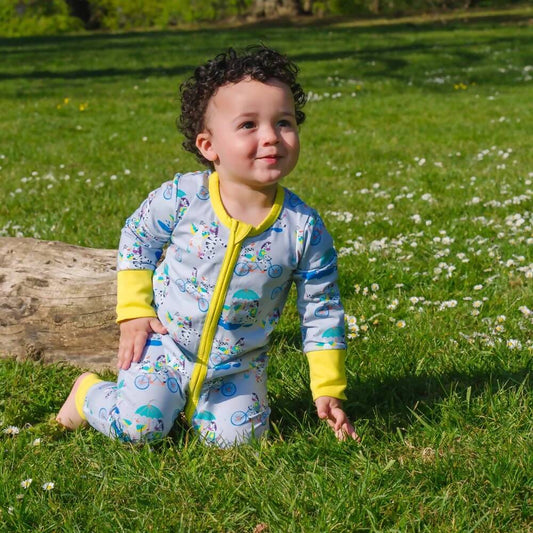
- Choose brands designed for longevity and hand-me-down potential. The best sustainable baby brands design for durability — reinforced stitching, generous sizing windows, and classic styles that work across ages. A well-made babygrow passed down to a second or third child has an exceptionally low environmental footprint per wear.
- Focus your spending on the items with highest skin contact. Sleepsuits, bodysuits, muslins and blankets — the things your baby wears or is wrapped in for the longest stretches — are worth prioritising for organic certification. Outerwear matters less, since it sits further from the skin.
Where to Shop
At Kiddykind, every brand in our marketplace is vetted for sustainability credentials, ethical production and quality. Browse our clothing collection, explore our curated organic range or discover our full sustainable selection. We also have dedicated ranges for girls and boys.
As the OBA 2026 Gold Winner for sustainable children's retail, we take our curation seriously. Every brand on Kiddykind has been reviewed against our sustainability framework — so you can shop with confidence, knowing that whatever you choose, it is made with care for your child and for the planet.